
Joint Commission's Accreditation 360 Merges the Physical Environment Chapter — Effective January 2026
The biggest accreditation change of 2026 is now in force. Under the Joint Commission's Accreditation 360 initiative, the former Environment of Care and Life Safety chapters were consolidated into a single Physical Environment chapter effective January 1, 2026 — a restructuring that touches every hospital and surgery center in Oregon.
The shift is more than organizational. The emphasis moves toward demonstrable performance outcomes rather than the sheer volume of documentation, which means the real-world condition and reliability of medical equipment is more visible to surveyors than ever. A binder of completed forms now counts for less than equipment that measurably works and a program that can prove it.
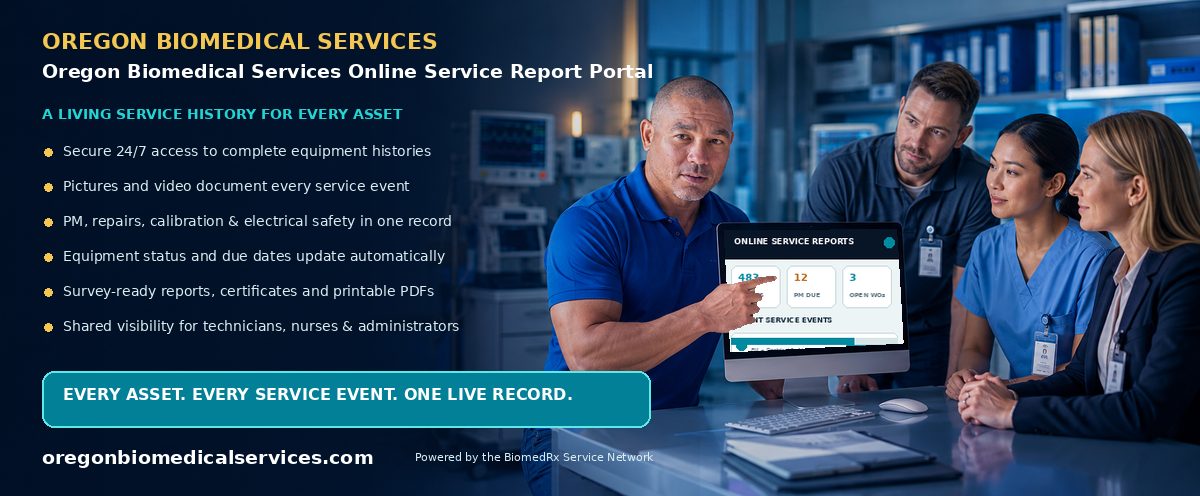
For biomedical programs, the response is to make ‘survey-ready’ a steady state: current inventories, closed preventive-maintenance tickets, trended performance data, and resolved corrective actions available on demand.
Sources: The Joint Commission — Accreditation 360; Hospital Equipment Maintenance Compliance Guide